
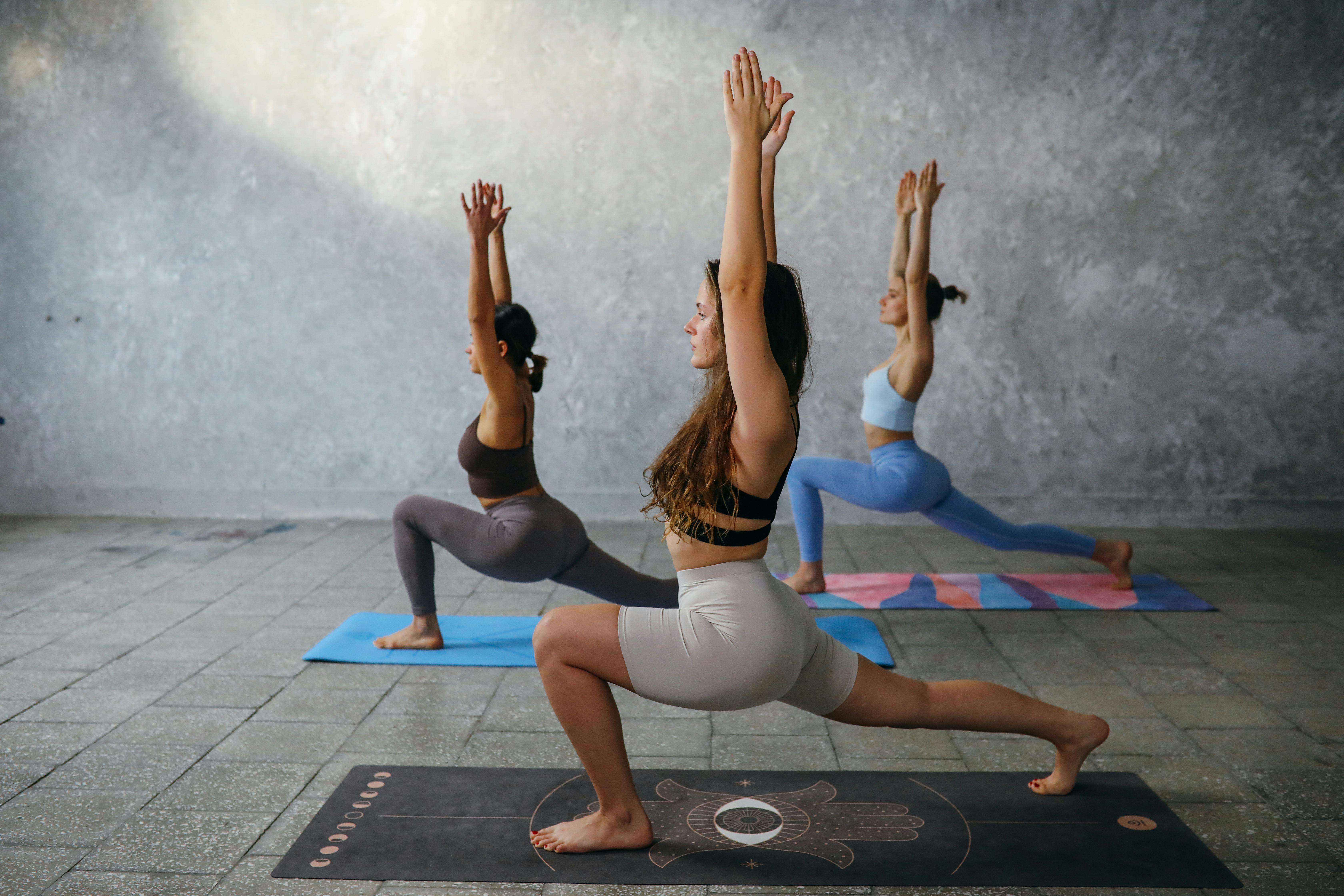
In 2026, AI-powered personalized yoga is transforming home practice, offering real-time feedback, customized flows, and holistic wellness integration. Discover how smart yoga mats, intelligent apps, and advanced wearables are optimizing your journey to mindfulness and physical mastery, and find the top products to invest in today for unparalleled well-being and a truly bespoke practice.
Introduction to the Topic
Imagine flowing through a yoga sequence with the precision of a master instructor, yet in the comfort and privacy of your own home. Picture receiving instant, personalized feedback on every breath, every alignment, every subtle shift of weight. Welcome to 2026, where this vision isn't just a futuristic dream—it's the reality of AI-powered personalized yoga, a revolutionary blend of ancient wisdom and cutting-edge technology that is redefining wellness.
For decades, yoga has been a cornerstone of physical and mental well-being, offering solace, strength, and serenity. Yet, traditional practice often comes with challenges: the difficulty of finding a class that perfectly matches your schedule and skill level, the cost of private instruction, or the uncertainty of whether your home practice is truly effective. The generic nature of many online classes, while convenient, often leaves practitioners yearning for the personalized attention that accelerates progress and prevents injury.
Enter Artificial Intelligence. In 2026, AI is no longer just a concept for sci-fi movies; it's an integrated part of our daily lives, and its application in yoga is nothing short of transformative. From smart yoga mats that detect micro-adjustments in your posture to intelligent apps that curate bespoke sequences based on your energy levels and goals, AI is delivering an unprecedented level of personalized wellness. This article will dive deep into the AI yoga revolution, exploring its mechanics, benefits, and, crucially, helping you navigate the market to find the best solutions for your unique journey to peak wellness.
Backgrounds & Facts
The journey of yoga from ancient spiritual discipline to global fitness phenomenon has been remarkable. However, the digital age has presented both opportunities and challenges. The global pandemic of the early 2020s accelerated the shift towards home workouts and online wellness, pushing millions to seek digital alternatives for their yoga practice. While platforms like Zoom and YouTube provided accessibility, they often fell short in offering the tailored guidance crucial for safe and effective progression.
This is where the demand for personalized, data-driven wellness solutions surged. Consumers in 2026 are more health-conscious and tech-savvy than ever. They expect more than just generic content; they want experiences tailored to their individual needs, preferences, and physiological data. This demand has fueled the rapid innovation in yoga technology.
AI in yoga primarily leverages several key technologies:
- Computer Vision: Advanced cameras and algorithms analyze your body's movement and alignment in real-time, providing instant feedback on your posture and form.
- Pressure Sensors: Embedded in smart mats, these sensors detect the distribution of your weight, helping to refine balance and ensure proper grounding in poses.
- Biometric Data Integration: Wearable devices (smartwatches, rings, bands) track heart rate, breath patterns, stress levels, and even sleep quality, allowing AI to recommend practices that address your holistic well-being.
- Machine Learning: AI algorithms learn from your practice data over time, adapting routines, suggesting modifications, and tracking your progress with unparalleled accuracy. This means your yoga practice evolves with you, becoming more effective and targeted with every session.
According to a 2025 report by Global Wellness Institute, the 'Smart Wellness Tech' market, which includes AI-powered fitness and mindfulness solutions, is projected to exceed $350 billion by 2027, with personalized yoga solutions being a significant growth driver. The benefits are clear: reduced risk of injury, faster skill acquisition, increased motivation through personalized challenges, and greater accessibility for individuals who might not have access to high-quality in-person instruction.
Expert Opinion / Analysis
To understand the profound impact of this shift, we spoke with Dr. Anya Sharma, CEO of Zenith Wellness Innovations and a renowned yoga philosopher and AI ethics specialist. “The integration of AI into yoga is not about replacing the human element; it’s about augmenting and democratizing access to unparalleled precision and personalization,” Dr. Sharma explains. “Think of AI as your most attentive, data-driven yoga companion, constantly learning and adapting to your unique physiological and psychological state.”
Dr. Sharma emphasizes that while traditional yoga relies heavily on the instructor’s observation and intuition, AI brings an objective layer of analysis. “A smart mat with pressure sensors can detect micro-adjustments in your Warrior II that even the most experienced human eye might miss. An AI app can recommend a restorative flow based on your sleep data from last night and your current stress levels, something a general class simply cannot do,” she notes.
One of the most significant advantages, according to Dr. Sharma, is injury prevention. “Poor alignment is a leading cause of yoga-related injuries. AI’s real-time feedback acts as a constant corrective mechanism, guiding you safely into and out of poses, making advanced practices more accessible and safer for everyone, from beginners to seasoned practitioners.” She also highlights the mental wellness aspect. “AI-powered breathwork and meditation modules, personalized to your nervous system’s current state, are proving incredibly effective in managing stress and anxiety, offering a level of biofeedback previously only available in clinical settings.”
However, Dr. Sharma also points out the ethical considerations. “Data privacy is paramount. Users must be assured that their biometric and movement data are secure and used ethically to enhance their practice, not for unwarranted commercial exploitation. Transparency from companies about data handling is non-negotiable.” She concludes, “The future of yoga in 2026 isn't about choosing between tech and tradition, but integrating them to foster a deeper, more informed, and truly holistic path to well-being.”
💰 Best Options in Comparison (VERY IMPORTANT)
With the market rapidly expanding, choosing the right AI yoga solution can be daunting. To help you make an informed decision and invest wisely in your wellness journey, we’ve analyzed the leading options available in 2026, focusing on products that offer exceptional value, innovation, and user experience. Whether you're a beginner seeking guidance, an advanced practitioner refining your form, or someone looking for holistic wellness integration, there's an AI solution for you.
-
ZenithFlow Mat Pro (2026 Edition): The Ultimate Smart Mat
The ZenithFlow Mat Pro is the gold standard for real-time posture correction. Utilizing an array of advanced pressure sensors and a discreet, integrated display that provides visual cues, this mat offers unparalleled feedback. As you move, it detects subtle misalignments and uses gentle haptic feedback (vibrations) to guide you into the perfect pose. Its AI engine learns your individual movement patterns, offering personalized flow suggestions and progress reports. Ideal for those who prioritize precise physical alignment and want immediate, tangible feedback without needing an external camera or screen.
-
PranaPilot AI: Your Adaptive Digital Yoga Coach
PranaPilot AI is a subscription-based app and platform designed for dynamic, personalized daily routines. It integrates seamlessly with popular wearables (like the BioBalance Band mentioned below) to pull in your real-time biometric data – heart rate, stress levels, even sleep quality from the night before. Based on this data, it generates truly adaptive yoga sequences, breathwork exercises, and meditation modules tailored to your current physical and mental state. It's perfect for busy individuals who need flexible, intelligent routines that evolve with their body and mind, offering motivational challenges and detailed progress analytics over time.
-
BioBalance Wellness Suite: Holistic Mind-Body-Data Integration
For the ultimate holistic wellness enthusiast, the BioBalance Wellness Suite offers a comprehensive ecosystem. This premium package combines a multi-sensor smart mat (different from ZenithFlow, focuses more on biofeedback), a sleek wearable wrist/ankle band, and an advanced AI-powered app. The suite provides a 360-degree view of your well-being, correlating your yoga practice with heart rate variability, sleep patterns, stress markers, and even suggesting nutritional adjustments. It excels in offering recovery insights and long-term wellness trend analysis, making it a powerful tool for those committed to a data-driven approach to their entire health regimen.
Here’s a comparison table to help you weigh your options:
| Feature / Product | ZenithFlow Mat Pro | PranaPilot AI | BioBalance Wellness Suite |
|---|---|---|---|
| Core Function | Real-time posture correction, guided flows | Personalized daily routines, progress tracking | Holistic wellness data, integrated practice |
| Key Tech | Pressure sensors, haptic feedback, integrated display | AI algorithm, wearable integration, cloud analytics | Smart mat, multi-sensor wearable, advanced app |
| Ideal User | Beginners & experienced yogis seeking precision & safety | Busy individuals needing flexible, adaptive routines | Holistic wellness enthusiasts, data-driven users |
| Price Range (2026 Est.) | $$ ($300-$500 one-time) | $ ($15-$30/month subscription) | $$ ($700-$1200 for full system) |
| Unique Selling Point | Unrivaled real-time physical feedback & posture correction | Truly adaptive and personalized daily practice based on biometrics | Comprehensive mind-body-data integration for holistic health |
| Considerations | Initial hardware investment, less focus on mental wellness | Requires consistent app engagement, subscription cost | Higher upfront cost, can be overwhelming with data |
Outlook & Trends
The future of AI-powered yoga in 2026 and beyond promises even more immersive and integrated experiences. We anticipate several key trends:
-
Hyper-Personalization & Predictive AI: Future AI will move beyond reactive adjustments to predictive recommendations. By analyzing vast amounts of your historical data, AI could anticipate your needs, suggesting specific sequences to prevent potential imbalances or even predicting optimal times for certain practices based on your circadian rhythm and upcoming stressors. Imagine AI recommending a specific restorative pose before you even feel the tension setting in.
-
Immersive Virtual & Augmented Reality: Expect VR and AR to transform your home into a serene ashram or a breathtaking mountain peak. High-fidelity virtual yoga studios, complete with AI instructors providing real-time holographic feedback, will offer a truly immersive experience, blending the physical and digital worlds seamlessly. Haptic suits could provide full-body tactile guidance, mimicking an instructor's touch.
-
Integration with Smart Home Ecosystems: Your AI yoga assistant will likely integrate with your smart home. Picture your lighting dimming to a calming hue, ambient nature sounds filling the room, and your thermostat adjusting to the ideal temperature as your AI-guided practice begins, creating a perfectly tailored sanctuary for your session.
-
Advanced Biometric & Neurological Feedback: Beyond heart rate and breath, future AI yoga could incorporate real-time brainwave monitoring (EEG) to optimize meditation and mindfulness practices, providing direct feedback on your mental state and guiding you to deeper states of focus and relaxation.
-
Ethical AI & Data Security: As these technologies become more pervasive, the focus on ethical AI development, robust data privacy protocols, and transparent use of personal health information will be paramount. Companies that prioritize user trust and security will lead the market.
These advancements signify a future where yoga becomes an even more accessible, effective, and deeply personal journey for millions, constantly evolving with the individual practitioner.
Conclusion
The year 2026 marks a pivotal moment in the evolution of wellness, with AI-powered personalized yoga leading the charge. This innovative fusion of ancient wisdom and cutting-edge technology is not just a passing trend; it's a fundamental shift in how we approach our physical and mental well-being. By offering unparalleled personalization, real-time feedback, and holistic integration, AI yoga empowers practitioners of all levels to deepen their practice, prevent injuries, and unlock new dimensions of self-awareness and strength.
Whether you choose the precision of a smart mat like the ZenithFlow Mat Pro, the adaptive intelligence of an app like PranaPilot AI, or the comprehensive ecosystem of the BioBalance Wellness Suite, investing in AI yoga is an investment in a more informed, effective, and profoundly personal wellness journey. These tools are designed to complement, not replace, the spiritual and meditative aspects of yoga, enhancing your connection to your body and mind with data-driven insights.
The future of yoga is here, and it's calling you to a deeper, more informed practice. Explore these innovations, compare the options that best suit your needs, and embark on a transformative path to elevate your well-being today. Your perfect pose, and your peak wellness, are now more attainable than ever before.