
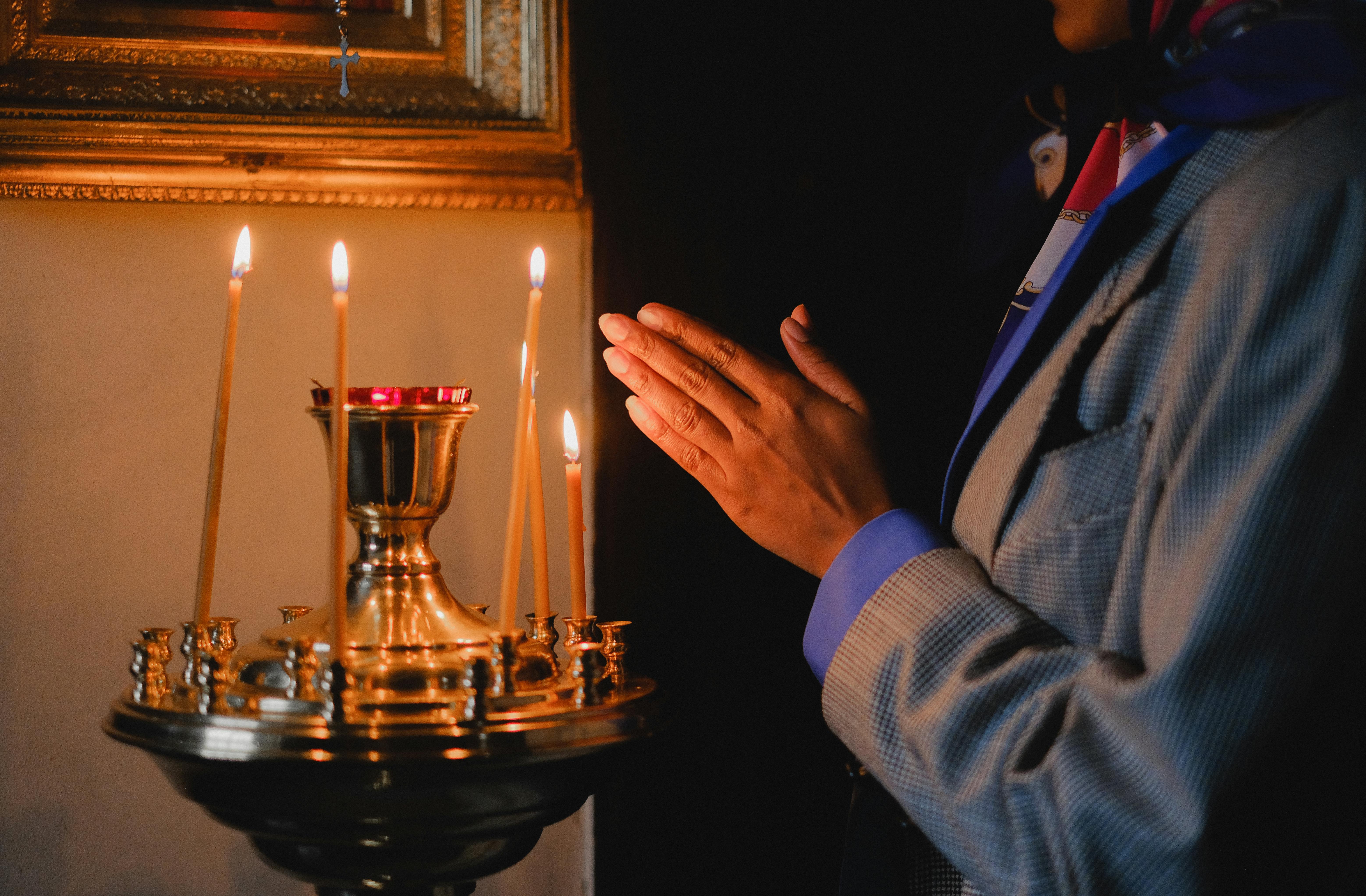
Prayer is a physical activity in most traditions, with specified positions and movements. The prescriptions are consistent enough to suggest they are doing something identifiable.
Posture communicates before words do
Kneeling, bowing and prostration are recognisable gestures of deference in ordinary social life, long predating their religious use.
Adopting them in prayer therefore expresses a relationship using a vocabulary everyone already understands, without needing that relationship to be described.
Standing carries the opposite implication in many settings, indicating readiness or standing before someone as an equal party, and traditions choose deliberately between them.
The body's position affects attention
Positions differ in how much effort they require, and effortful ones are difficult to maintain while thinking about something else.
Prostration in particular reorganises attention because it removes ordinary visual input and involves the whole body in a single action.
Traditions that use physically demanding forms often say this explicitly, describing the posture as a means of keeping the practitioner present.
Sequences mark structure within a prayer
Where a prayer has distinct sections, movements frequently mark the transitions between them, so that the body rather than a text indicates progress through the sequence.
This makes a long observance possible to follow without reading, since the next movement follows from the last and the whole is learned as a single chain rather than as a list of parts.
It also allows a group to stay together without direction, because everyone can see where everyone else has reached and adjust their own pace to match.
Collective movement has social effects
Groups moving in unison consistently report stronger feelings of connection afterwards, and the effect is documented across religious, military and sporting activities alike.
Synchronised action requires attending to other people continuously in order to stay with them, which is itself a form of participation independent of anything being said.
This helps explain why traditions holding very different beliefs converge on coordinated physical forms for their main gatherings, and why those forms tend to survive changes in doctrine.
Adaptation is provided for within the traditions
Illness, injury, age and pregnancy make some positions difficult or impossible, and most traditions have long-standing provisions permitting substitutes rather than treating the person as excluded.
Typical accommodations allow sitting in place of kneeling, a small gesture in place of a full movement, or the formed intention where the action cannot be performed at all.
The existence of detailed rulings on this indicates that the physical form is considered significant while never being treated as more important than the person performing it.